
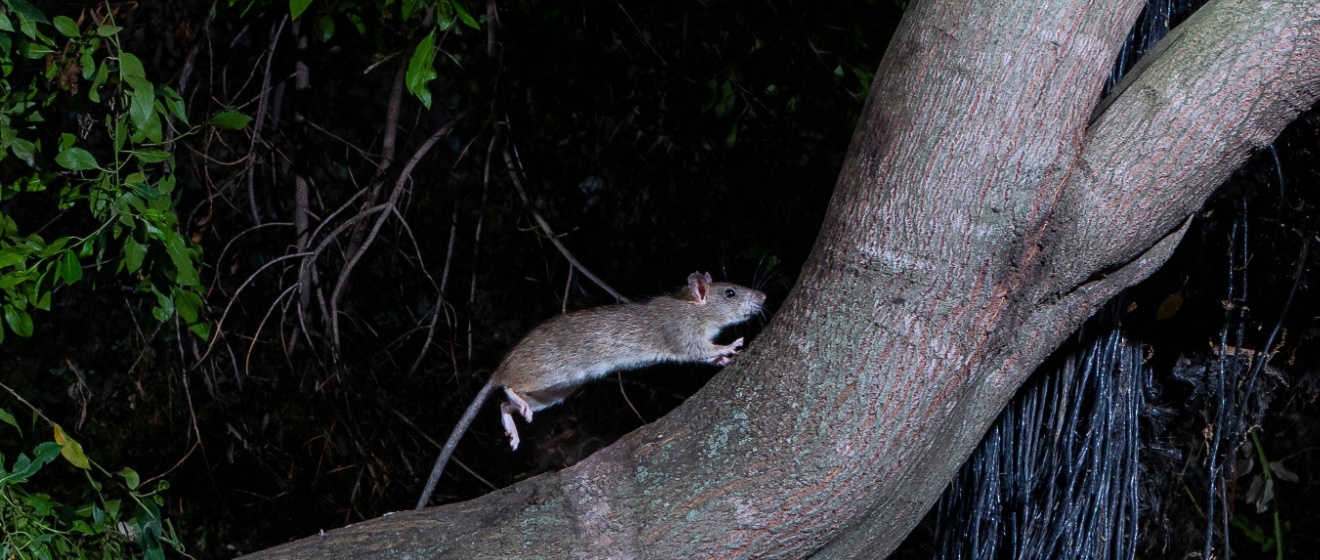
Homeowners with large, mature trees on their property tend to value the shade and character they provide. What many do not anticipate is that those same trees can contribute directly to rat problems in the home. Our rodent control team in the Olive Branch and Memphis area routinely identifies tree proximity as a contributing factor when assessing roof rat infestations.
The Bridge Effect
Roof rats are exceptional climbers. They travel along fence lines, utility wires, and tree branches with ease, and they use any elevated pathway that leads toward a roofline as a potential route onto a structure. When a mature tree has branches that extend over or near a roof, those branches function as a direct access point. The rat does not need to find a ground-level entry—it climbs the tree and reaches the roofline from above.
The proximity and height of overhanging branches determine how significant this risk is. A large oak, sweetgum, or pecan with branches extending within a few feet of a roofline can provide consistent rooftop access for an established local rat population.
Food and Shelter Resources
Beyond access, mature trees provide two other resources that support rat populations near structures: food and shelter. Fruit-bearing trees—fig, peach, pear, pecan, and others common in North Mississippi and Southwest Tennessee—provide a food source through the warmer months and into fall. Fallen or unharvested fruit that accumulates beneath trees sustains rodents at ground level as well.
Dense canopy and hollow tree cavities offer nesting and shelter. A yard with several large, older trees may be supporting a resident rodent population independent of any interior infestation.
The Limits of Trimming
Trimming branches back from the roofline is a reasonable preventive step and does reduce a known access route. Most recommendations suggest maintaining several feet of clearance between branches and the roof. That said, trimming alone does not address an existing infestation, and rodents already established inside a structure will not leave because a branch has been removed. Exclusion work—physically identifying and sealing all entry points with materials animals cannot chew through—is what resolves an active problem.
It is also worth noting that roof rats travel along utility lines and fence tops as well. Removing tree access reduces one route, but it does not eliminate all elevated pathways to the roof.
What Homeowners With Mature Trees Should Watch For
Properties with large trees, particularly those with branches near the roofline or that bear fruit, carry a higher baseline risk for roof rat problems. Signs worth monitoring include scratching or movement sounds in the attic at night, chewed or damaged areas around roof vents or fascia, droppings near the base of trees or along fence lines, and evidence of gnawing on fruit still on the tree.
If any of these signs are present—or if you want to know whether your property’s tree coverage is creating structural vulnerability—a professional inspection provides a clear picture. To schedule a free inspection, contact Magnolia Wildlife Solutions.