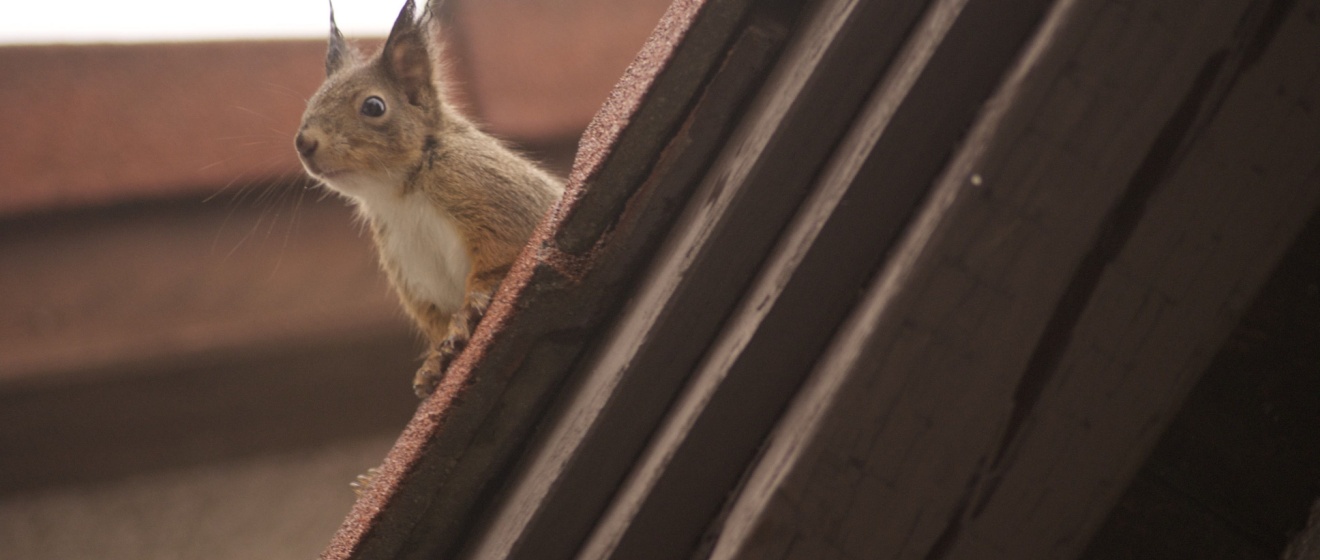
Squirrels racing across Collierville yards may look harmless, but when they slip into an attic, the risks become far more serious. What starts as a bit of scratching overhead can quickly escalate into damage that threatens both your home and your health.
To see why squirrels are dangerous in attics, let’s break down the specific hazards they create for Collierville homeowners:
Electrical Damage: A Fire Waiting to Happen
Squirrels gnaw constantly to keep their teeth in check, and electrical wiring is often their target. Once insulation around wires is stripped away, sparks can ignite, turning a hidden corner of the attic into the starting point of a house fire.
- Frayed wiring hidden behind insulation can spark without warning.
- Chewed junction boxes compromise the safety of entire circuits.
- Damaged cable sheathing exposes copper, increasing fire risk.
- Interference with smoke detectors or alarms reduces protection during emergencies.
- Power surges from compromised wiring can damage appliances throughout the home.
Contamination From Droppings and Urine
Waste left behind by squirrels doesn’t just smell—it contaminates insulation and wood. Over time, droppings and urine create foul odors and degrade air quality. These contaminants can harbor bacteria and parasites, posing health risks to families, especially children or elderly residents who are more vulnerable to respiratory issues.
In addition, once waste dries, particles can become airborne and circulate through the home’s ventilation system. This increases the risk of respiratory irritation and can trigger allergies or asthma symptoms, making cleanup far more complex than simply removing the animals.
Structural Weakening of the Attic
Wood beams and supports are not immune to squirrel activity. Constant gnawing weakens the integrity of these structures, which can compromise the attic’s stability. While the damage may start small, over time it can lead to costly repairs and reduce the overall safety of the home.
Beyond chewing, squirrels often dig into insulation and nesting materials, shifting weight unevenly across attic spaces. This can accelerate wear on older structures and create vulnerabilities that worsen during storms or heavy rainfall.
HVAC System Damage
Attics often house ductwork, and squirrels are notorious for tearing into it. Once ducts are compromised, heating and cooling efficiency drops, and contaminants from droppings can spread through the ventilation system. This not only raises energy bills but also impacts indoor air quality throughout the home.
Damaged ducts also allow conditioned air to escape into the attic instead of circulating through the house. Over time, this forces HVAC systems to work harder, shortening their lifespan and leading to expensive repairs or replacements.
Loss of Stored Belongings
Many homeowners use attics for storage, but squirrels see boxes, clothing, and keepsakes as convenient nesting material. Items can be shredded, contaminated, or destroyed entirely, leaving behind both financial loss and sentimental frustration.
Even items that aren’t directly chewed can be ruined by droppings, urine, or nesting debris. Moisture from waste can seep into cardboard boxes and fabrics, spreading contamination and making stored belongings unsafe to handle or salvage.
Entry Points That Invite More Wildlife
Squirrels don’t just squeeze through small gaps—they enlarge them. Once an entry point is widened, other wildlife such as raccoons or birds may also gain access. What begins as a squirrel problem can quickly escalate into a multi-species infestation if left unchecked.
- Roofline gaps widened by chewing allow larger animals inside.
- Damaged soffits and vents become open gateways for birds and bats.
- Compromised flashing around chimneys creates recurring access points.
- Expanded holes in siding invite rodents and insects.
- Weakened fascia boards provide easy re-entry even after squirrels are removed.
The Collierville Environment: A Perfect Setup for Squirrel Intrusions
Collierville’s blend of suburban neighborhoods and wooded areas makes attics an attractive shelter for squirrels. Warm, dry, and safe from predators, attics provide the perfect nesting environment. Left unchecked, squirrels often return season after season, turning a temporary intrusion into a recurring problem.
What makes Collierville especially vulnerable is the proximity of homes to mature trees and green spaces. Squirrels use overhanging branches as natural bridges to rooftops, and once they find a gap in soffits, vents, or rooflines, they can easily establish nests inside. The town’s seasonal climate also plays a role—colder winters drive squirrels indoors for warmth, while spring and summer bring breeding cycles that increase the likelihood of infestations.
Wildlife Hazards Don’t Belong in Your Home
Squirrels inside an attic can cause far more than simple disruption—they create risks that affect safety, health, and property value. Magnolia Wildlife Solutions focuses exclusively on wildlife management, giving Collierville homeowners confidence that the problem will be handled with expertise and care.
Our licensed specialists use humane, effective methods to remove squirrels while reinforcing vulnerable areas of the attic to prevent future wildlife problems. By addressing both the animals and the conditions that allowed them inside, we provide long-term protection that keeps your home secure.
Schedule your professional attic inspection with Magnolia Wildlife Solutions today. We proudly serve Southwest Tennessee and Northern Mississippi, delivering trusted, humane wildlife control that protects families and properties across the region.